

Things to Do in Bir in October 2026: Paragliding, Monasteries and Ektara
Updated 7 Nov 2026
Fly from Billing on the first clear morning, then fill the rest with monasteries, tea gardens and Baijnath. Plus the quieter corners and what's on in October.
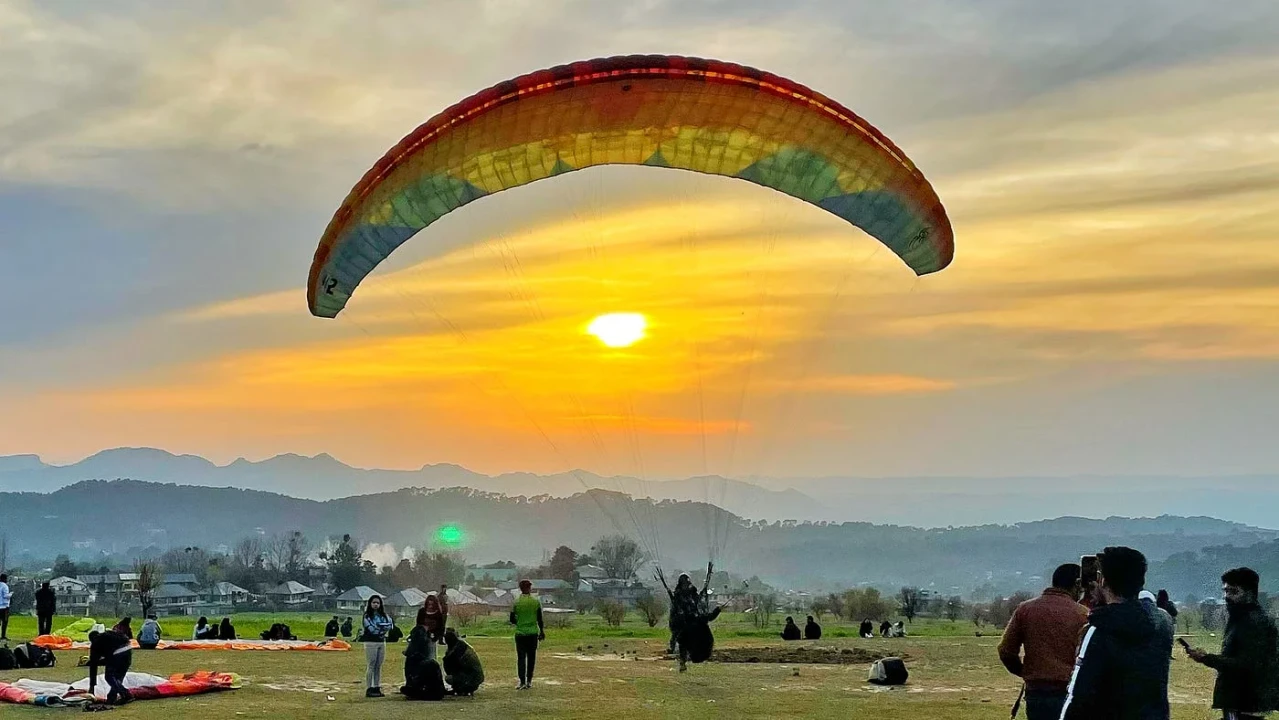
Coming to Bir in October? Most people come to fly, and October is in the autumn flying season, so book a paragliding flight for your first clear morning and build the rest of the trip around it: the Tibetan colony and Chokling monastery, a drive up to Billing, the tea gardens and a half-day at Baijnath temple. If your dates are flexible, aim for 18–20 October, when Ektara, a new folk and mystic music festival, runs in Bir, and register before 11 October, when its prices go up.
This guide covers October 2026, checked on 25 September 2026. All times are IST. Prices, hours and schedules change, so confirm anything you are building a day around.
Bir in October at a glance
- Flying
- October–November is the autumn season; the annual monsoon suspension ends in mid-September
- Tandem flight
- Published prices of roughly ₹2,500–3,500 for a standard 15–30 minute flight
- Billing take-off
- About 2,400 m, 14–16 km by road above Bir, around 45 minutes by taxi
- Weather
- Mostly clear days and cold mornings; colder again at Billing
- Festival
- Ektara Folk & Mystic Music Festival, 18–20 October 2026; passes from ₹3,000 until 11 October
- Checked
- 25 September 2026
Flights depend on the wind on the day. No operator can promise one in advance.
Go paragliding from Billing
Bir-Billing is one of the best-known paragliding sites in the world, and it is why most visitors are here. A tandem flight, where you fly strapped to a qualified pilot, takes off from the meadow at Billing, about 2,400 m, and lands in the fields at Bir, roughly a kilometre lower. No experience is needed.
A standard tandem flight lasts 15–30 minutes, depending on the air that day. Operators' published prices run roughly ₹2,500–3,500 for a standard flight, more for a longer one, and video is usually an extra ₹500–1,000. Ask whether the price includes the jeep up to Billing, and what happens to your money if the flight is cancelled.
Book through a registered operator and ask to see the pilot's licence, because unlicensed pilots do fly alongside licensed ones.
Flying generally runs from mid-morning to mid-afternoon. Take the earliest slot you can, and keep a second morning free in case the wind says no on the first. Most of the day is waiting, for the wind, for your turn, for the jeep. The flying itself fits inside a coffee break.
October is a good month for it. The monsoon suspension, which stops flying in Himachal from mid-July to mid-September, is over, and the autumn season runs into November. If flying is the whole point of your trip, add a spare night rather than a spare hour.
Is Billing worth it if you are not flying?
Yes. It is a high meadow at about 2,400 m, 14–16 km above Bir by road, roughly 45 minutes by taxi. From the top you watch pilots launch one after another, with the Kangra valley below and the Dhauladhar range behind.
Take a warm layer. Billing is about a kilometre higher than Bir, which costs roughly six degrees, and a take-off meadow is by definition somewhere the wind can find you. Go in the afternoon for the light, and agree the ride back with your driver before you set off, because it is a winding mountain road and not one to be looking for a taxi on after dark.
Watch the landings at Chaugan
The landing site at Chaugan, on the edge of Bir, is where the flights end and, most afternoons, where everyone else ends up too. Cafés and lawns sit along the field, and from a table you can watch gliders come down from Billing one after another.
It costs nothing. If you are undecided about flying, it is a free preview. Chaugan is also where you can hire a bicycle for the cycling loop further down this guide.
The Tibetan colony and Chokling monastery
Bir's other half is its Tibetan colony, settled in the 1960s and still the centre of daily life in the lower town. Chokling monastery is in the middle of the colony. It has a large statue of Padmasambhava, the teacher credited with bringing Buddhism to Tibet, and a stupa, a dome-shaped Buddhist shrine, that people walk around clockwise. Entry is free. Published opening times differ, somewhere between 8–9am and 5–6pm, so go in the morning, which all of them cover.
Ask before taking photographs inside, and keep your voice down if prayers are on. The lanes around the monastery have bakeries, small shops and cafés. If you have an afternoon in Bir and no plan, spend it here.
Palpung Sherabling monastery
Palpung Sherabling, at Keori, is a major seat of the Kagyu tradition, one of the four main schools of Tibetan Buddhism. It is 4–7 km from the colony by road, depending on your starting point, or about an hour on foot from Chaugan, next to the landing site.
Entry is free, and the main temple is the reason to go. Take a taxi out and walk back if the day is dry; the hour on foot through the villages is half the point.
If you only have time for one monastery, choose by how you are getting around. On foot and short of time, Chokling, because it is in the colony you are probably staying near. With a taxi and a free morning, Sherabling, for the larger temple and the walk back.
Deer Park Institute
Deer Park Institute, about a kilometre from the centre of Bir, is a study centre founded in 2006 for Buddhist and Indian philosophy, contemplative practice and the arts. Visitors can walk around the grounds; check its schedule before turning up for anything specific.
October is one of its busier months. Four programmes are listed with us, among them a week of Hindustani (north Indian classical) music and a free public puja, a Buddhist prayer ceremony:
Book the multi-day programmes directly with Deer Park. The puja on 16 October is free, open to everyone and needs no registration.
Tea gardens, and a working tea factory in Palampur
Bir is part of Kangra's tea country, and there are tea gardens around the town. Don't build a day around the Bir tea factory, though, because Bir's cooperative factory stopped working years ago and Palampur's is the one still running.
To see tea being made, go to the Palampur Cooperative Tea Factory, on the main road about 2 km south of Palampur and roughly 30 km from Bir, an hour by road. It processes leaf from the valley's small growers. A short visit shows how the leaf is withered, rolled and dried, and a shop nearby sells the tea. Visits are free; the door is usually shut, so ask the guard at the main-road gate.
Processing runs from roughly March to October, so the earlier in the month you go, the better your chance of seeing the machines running. We couldn't confirm any fixed visiting hours, and the factory works to the leaf's timetable, not the visitor's. So make it part of a day with Baijnath temple, below, which is on the way. Bir's own gardens are best walked on the way to or from Sherabling.
Baijnath temple
Baijnath temple is a Shiva temple built in 1204, 8–10 km from Bir by road. Entry is free. It is a working temple, so dress modestly and leave shoes at the entrance.
A taxi makes it an easy half-day. Some Delhi buses also terminate at Baijnath rather than Bir, which is how many visitors first meet the temple town: early in the morning, with a bag, looking for the Bir bus. If that is you, the temple is worth an hour before the last leg.
Gunehar and its waterfall
Gunehar, a village beside Bir, has a waterfall a short walk away, about 1.5 km. Allow 2–3 hours for the walk there and back, including time at the fall. It is free and needs no permit.
After the monsoon the fall carries less water, but the path is drier and easier. Wear shoes with grip for the rocks near the pool.
Off the usual list
Once the standard list is done, these are worth the extra effort:
- Rajgundha. A high meadow village at about 2,700 m beyond Billing. Walk in on a 12–14 km trail from Billing, which takes 5–6 hours, or drive 25–30 km on a rough mountain road that needs a four-wheel drive. Stay overnight, because 5–6 hours each way leaves no time to actually be there. The road is often impassable in winter, so October is one of the last comfortable months; carry warm layers for the night.
- Barot valley. A quiet trout-fishing and walking valley. A newer, more direct road from Bir makes it about 38 km, against 53–65 km the old way via Jogindernagar, so check the route with your driver. Allow a full day.
- Dharmalaya Institute. A sustainable-living campus about 2 km from Bir, built with the earth-architecture methods associated with the architect Didi Contractor. Visiting hours are 11am–12:30pm, Monday to Friday, with a free public tour every Wednesday; write at least a week ahead. A private tour is by a minimum donation of ₹500. It is closed on weekends and public holidays. Visiting Dharmalaya.
- Bangoru waterfall. It is 4.5–6.5 km from the colony, depending on where you start, with about an hour's walk at the end. It sees fewer visitors than Gunehar, so ask at your guesthouse for the path before you set off; after the monsoon the trail is drier and easier to follow.
- A cycling loop through Sansal. Loops of 16–23 km run from the landing site through Sansal village and the Sherabling area. Hire a bike in Chaugan, next to the landing site, for about ₹100 an hour.
- Tashi Jong monastery. It belongs to the Drukpa branch of the Kagyu school and is about 18 km from Bir and 15 km from Palampur. The togdens, a rare community of long-term meditating yogis, live here. It is a proper side trip, so pair it with a day in Palampur.
What's on in Bir this October
The October highlights listed on On The Hills:
Ektara Folk & Mystic Music Festival, 18–20 October. Five artists so far, including Arun Goyal, who sings Kabir in the Malwa tradition, and Lateeb Khan, a Manganiyar musician from Jaisalmer, plus village walks and Nati, Himachal's folk dance. Passes are ₹3,000 for the festival only, ₹7,000 with camping and meals, or ₹12,000 with a room and meals, so the last two replace booking a stay. Prices rise after 11 October. The festival is at Gunehar, the village beside Bir.
Splendor of the Night – Night Sky Festival, Fridays to Sundays, 2–18 October. ₹299–499.
Baul Music Satsang, 4 October, 7pm. A satsang is a spiritual gathering, and this one introduces Baul, a path of song and movement, through its songs and what they mean. Mahamaya and Tarpan Baul, who have followed that path for 14 years, are travelling from Shantiniketan in West Bengal for the evening. ₹300–400, at Soul Mantra in Bir Colony. If your dates miss Ektara, this is one evening of mystic song instead of three days of it.
Every week: Sunset Socials on Fridays near the landing site, a Himachali Dham (the traditional vegetarian feast) on Saturdays for ₹250, and Bachata classes on Sundays. Every evening: live music from Ajay Kumar at Up & Above, 7:30–10pm. All Bir listings
Always reconfirm weekly and daily sessions with the host.
Where do you find what's on in Bir?
Events and activities in Bir are scattered across a lot of websites and apps, including Instagram and WhatsApp groups. This is what each platform had on 25 September 2026. We publish On The Hills, so weigh our row accordingly.
| Platform | Good for | What to know |
|---|---|---|
| WhatsUpBir | Bir's weekly regulars, listed by the hosts themselves | Lists weekly classes and socials: 7 of its 8 events repeat every week. Fresh and immediately upcoming events are a rare sight. |
| GoBir | Home-chef meals, events and a local feed in one app | More a neighbourhood app for people who live in Bir than an events calendar. Nothing is visible until you install it on your device. |
| Gigavent | Gigs, workshops and house parties | Very new, and not many listings from Bir on it yet, but one to keep an eye on. The downside is that you can't see anything without installing the app and signing up. It's on iPhone and Android. |
| SortMyScene | Nightlife and festival tickets | Majorly has events from India's metro cities; hardly any from the hill towns. |
| AllEvents.in | Event listings from all over India | Casts a wide net, so a small town gets a thin slice. |
| On The Hills | What's on in Bir and the hill towns around it, each listing checked by a person | 17+ listings for October: 2 festivals, 3 retreats, 3 multi-day workshops, a free puja, and weekly classes and socials. No app or login; you WhatsApp the host or use their booking link. |
Three big names came up empty. Skillboxes only had past editions of Bir Music Festival, District got as close as a restaurant in Dharamshala, and Swiggy Scenes had nothing anywhere in Himachal.
For what is on while you are here, start with Bir this week or this weekend.
Before you go
- Book the earliest paragliding slot you can, and keep a second morning free for the weather.
- Agree the return from Billing with your driver before you go up.
- See Chokling on foot and take a taxi out to Sherabling or Baijnath.
- For a working tea factory, go to Palampur's, early in the month, before processing stops for the year.
- Check what's on for your dates in the full Bir listings.
For the journey, start with how to reach Bir.
Explore the towns in this guide
Plan the rest of your trip
Travel details and local guides for the next part of your journey.

Bir in November 2026: Last Flights of the Season, Then Slower Days
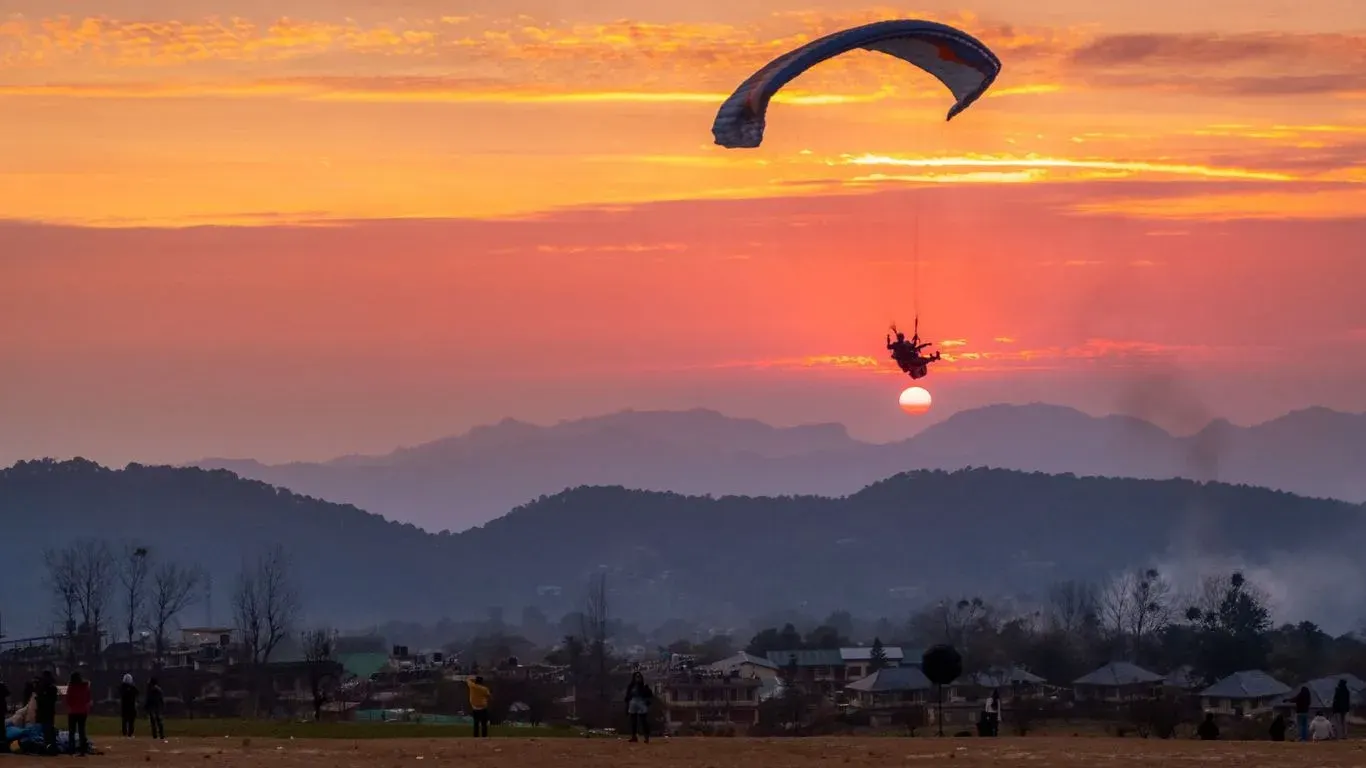
November is the end of Bir's autumn flying season and the days are short, so this guide plans the flight, Billing and the monasteries around a 5:30pm sunset. Plus Lhabab Düchen on 1 November, the tea gardens after the picking stops, and what's on this month.
Festivals and annual events in the Dhauladhar, month by month
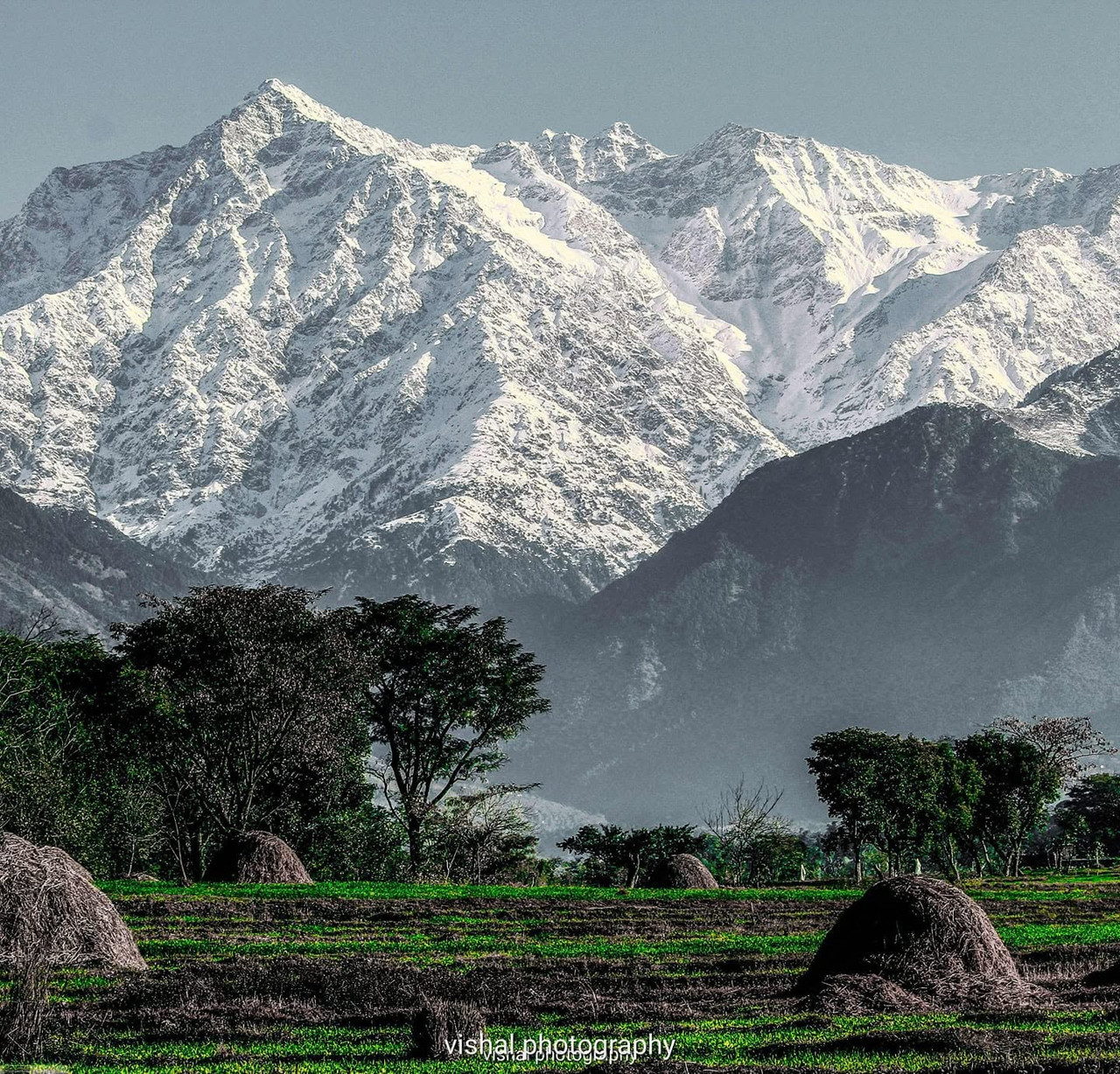
Losar, Tibetan opera in spring, the Dalai Lama's birthday on 6 July, Bir's flying season and DIFF in autumn. The Dhauladhar year, with fixed dates and moving programmes kept distinct.
How to reach Bir, Himachal Pradesh
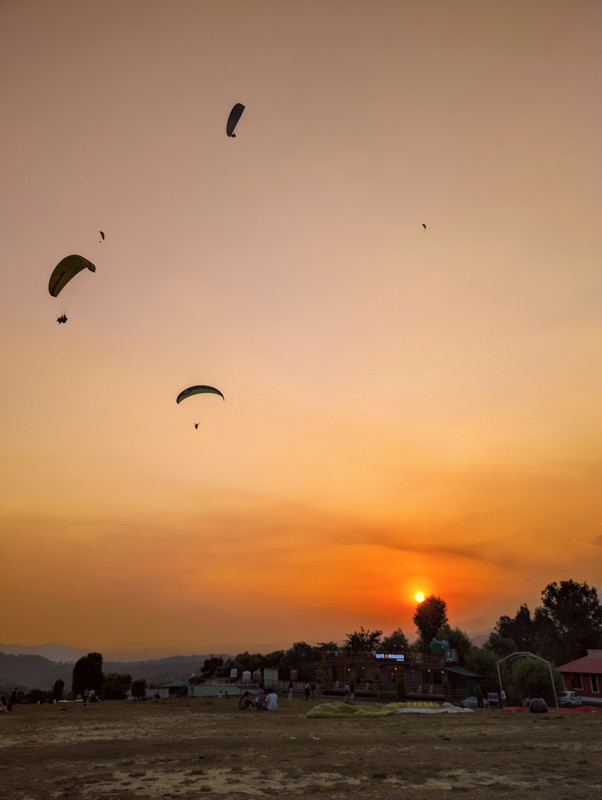
Getting to Bir is straightforward. Knowing where to get off is the part that trips people up — "Bir Road" is a highway junction, not the town, and the place you actually want is Chaugan.